
Flow Management Position
For controllers subject to FMP, please see at the end of this page for abbreviated procedures you can expect.
ALB = Arrival Load Balancer. For tutorial of ALB see here
0. Setup
Before logging on make sure you do following steps in your Euroscope
- Load Profile
DK_FMPDK_AIR - Open a CTR ASR file
- Go to "Other Settings" and "
SectorDisplayOwnershipSettings"Setup"find "Regions" andtakeenablecontrolEKDKof following sectorsAPP-E/W/N/SEKDK_B/I/D/EYour identifier er "FLOW"
- Make sure ALB is loaded as your plugin. write in ES command line ".alb open" to start the program.
1. Objective and Responsibilities
As Flow Manager (EKDK_FMP) Your objectives and responsibilities in the time period FMP active traffic flow is in sequence of succession:
- Establish Flow rates via ALB consistent with traffic demands.
- Chapter 2
- Manage flow inbound to copenhagen by use of the "BIDE" Acronym
- Balance
- Interrogate
- Distribute
- Equalize
- Modify the ACC sector allocation following traffic peaks
Details of how to achieve all is specified below and is continuously updated.
Please refer to this documentation every time before you log onto EKDK_FMP
2. Flow Rates into TMA
Adjusting the flow rate of aircraft handed over from the 5 ACC sectors (DK_E, DK_D, DK_B, MML, MMK) into TMA. They are managed and communicated via the ALB,ALB. and
- As
severalFMPpre-definedyouscenarios.start off with the "Standard Separation" - At >36 arrivals/hr you start planning the move to "Managed Separation"
- At full holdings everywhere you may choose to expand it with "Selected Separation"
2.1 Standard Separation (Green Flow)Flow
This scenario used from the beginning of event until hourly rate becomes more than 30/36/hr.
Arrival rate 150 flights / hr
2.1.1 Required Rates
All ACCs have standard handovers as pr. LAI/LOA of 10nm with leading aircraft faster, or 5nm with leading aircraft fast if prior coordination has been obtained.
This is valid for all sectors.
2.1.2 Thoughts and considerations
This rate is being used when so little load will be on the TMA (smaller than 30/36/hr) that the distribution of flights are negligeble.negligible.
Either
In this rate.scenario, Neitherthere are mandatory, but may make APPs use of vectors more efficient.
2.2 ReducedManaged flow (Yellow Flow)Flow
This scenario used from when ALB advise of an hourly rate of MORE than ~30/hr, but with TMA consitent load factor of less than 12 airplanes36/hr.
Arrival rate 56aim: flights / hr42-50/hr.
2.1.1 Required Rates
ALBAs hasinbound severalflow scenariosincrease beyond 36/hr, it will be time to start planning ahead to assign Arrival rates individually per STAR to assure balanced feeding to the TMA.
Rates should be set to fit with the expected inbound rush for rates~30 distributionminutes based onin the loadfuture.
Hourly inbound rate should ONLY be used as a marker for STARs.moving from "Standard" to "Managed" flow, NOT as a method of setting Arrival Rate (AR).
LoadT+0min. factors are displayed in percent forSetting the nextsequence.
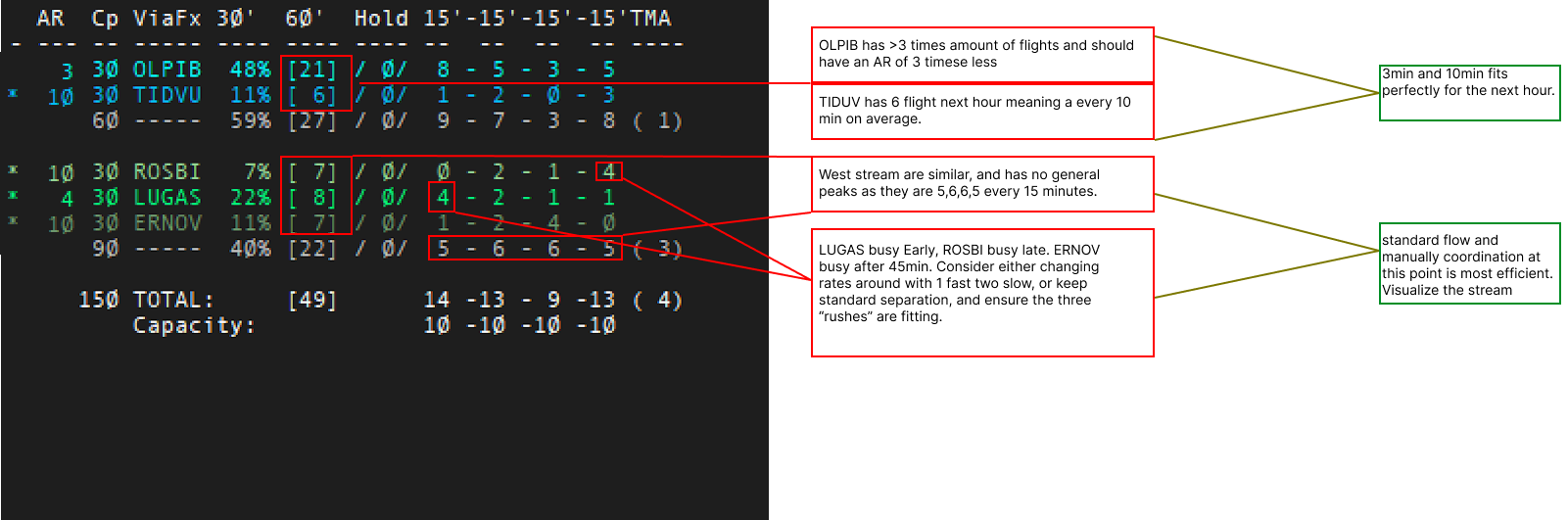
T+30min. Evaluating the sequence
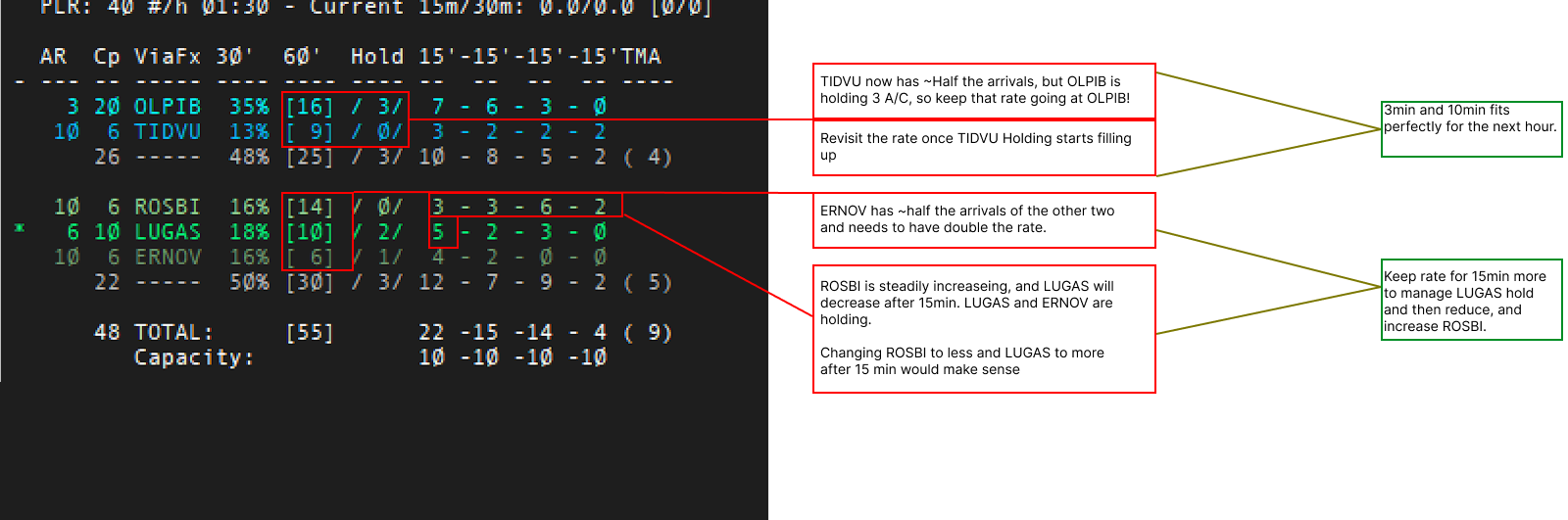
The scenarios included are valid 95% of the time and are adjusted as follows:
2.1.21 ThoughtsSlow Arrival Rates and considerationsHoldings other places
ConsiderIf startyou negotiatinghave a STAR with Uppervery ACCslittle traffic and others that are employing holdings, you must make sure that the very low traffic STAR just sent people in providingwithout delayholding.
- The
inARordermusttobehelpaddedachievingfrom when first airplane hits therequiredholdingseparationfix,asifearlyotherasSTARspossiblehave full holds - SAS123 arriving at TIDVU at 2035z with a 10min AR, shall enter the holding at can be released at 2045z, if OLPIB are holding flights.
Invoke LOA point on EDYY and EDWW to increase separation to minimum 25nm.
2.3 PeakExpanded Flow (RedFlow)
This scenario used from when ALB advise of a TMA load of 12two or more ANDSTARs 30flight/hr.on ora moreside inbound.
Arrivalhaving ratesignificant 45 flights / hrholdings
2.1.1 Required Rates
With full holdings at two STARs on the same side or more, the ALB prediction becomes very complex because it includes people in the holding.
You should do the following as soon as holdings starts to build up.
- Assign the AR based on the hourly expectation (with full holdings, the destribution over 15min doesn't matter anymore)
- Check the holding lists under ETO to identify if there are significant differences in holding time (+/- 5min).
- If there is an imbalance, move the full rate over to the STAR that has
similarlongerscenariosholds. - If
for Peak flow as well. 12 or more planes in TMA signifies that TMA has reached capacity and immediately actionthere isrequiredno imbalance, stick toreduce flow rate to a level that is sustainable and comparative to whattheTMA can land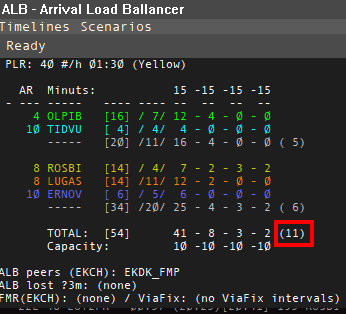
The scenarios included are valid 95% of the time and are adjusted as follows:
rate.
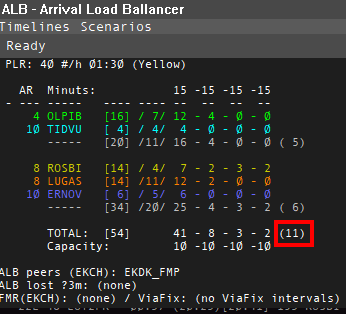
2.1.2 ThoughtsRequired Rates
Your logic must be to release a certain amount of aircraft from one hold before then releasing a certain amount from another hold.
Aircraft must be released with the rate given in ALB!
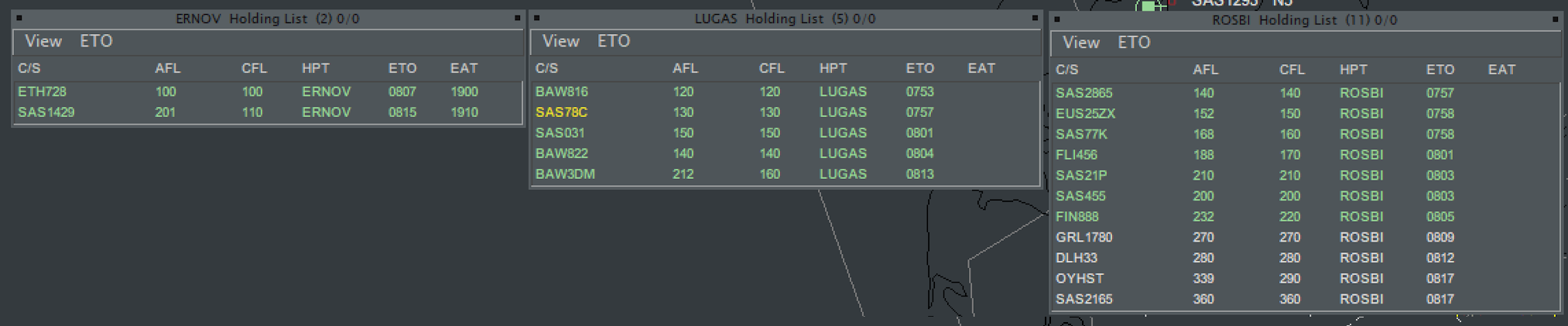
In this example you have the three holdings on WEST STREAM, and considerationsyou are individually releasing from ETO. Make following observations
- LUGAS has the oldest time at 0753
- ROSBI has a lot of planes in the holding
- ERNOV only has a few ones, and is not worth too much effort
3.5.3 Method
PeakFor flowthis scenario we will keep the ERNOV EAT at 15min for simplification, but if a large holding persist at ERNOV it must also be included. oldest ERNOV plane is still0807, basedwhich is 15min after oldest LUGAS plane and 12min after oldest TESPI plane, so a 15min EAT is appropriate!.
In this scenario we have an AR of a6 relativelymin evenfrom distributionTUDLO and TESPI
- combined rate is 3min from TUDLO/TESPI. Shift that to keep 3 min on one of
flights,thehoweverSTARs. - Identify
asoldest airplane BAW816 - Release all airplanes up until the
eveningfirstprogressesone which is later than the oldest of the next STAR- In this case SAS78C is 0757 and SAS2856 is 0756, meaning SAS78C is the
holdslastare filling up, it mayto beneededreleased
- In this case SAS78C is 0757 and SAS2856 is 0756, meaning SAS78C is the
- Tell EKDK_D_CTR to
moverelease all airplanes up to and including SAS78C.
4. Tell EKDK_E_CTR to hold all aircraft indefinitely.
5. Tell EKDK_E_CTR that after SAS2856 to release everybody with the rate until SAS445 (0803) to the "STOP"revert scenarioback to D_CTR to release SAS031 and moveBAW822 respectively
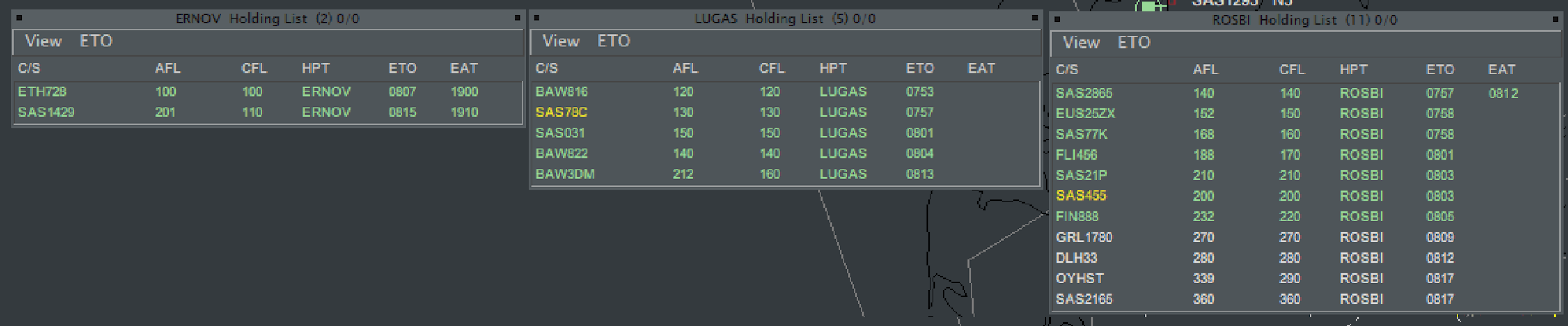
5. EKDK_D will release SAS031 and BAW822 as point 3-5, back to individualDK_E who will release fromuntil holdingsDLH33, asand describedthen init pointhead 2.5back to DK_D-
6. MMK will meanwhile release at EATs you are specifying. The rate takes into consideration an ERNOV every 15 minutes, so delay for an appropriate gap
3. Misc. Management
Use the Acronym BIDE to remember your tasks
3.1 "BIDE"
In addition to managing the flow rate, you need to manage different aspects of the night in regards to traffic. For an attempt to make it easier to remember the acronym BIDE can be used, to remember the four different areas you must manage.
- Balance
- Prioritise a specific
STARstream via the ALB when load is disproportionally heavy
- Prioritise a specific
InterrogateInformCoordinateKeepwithAPP-COvariousinuppertheACCsloop(DK_A,ofDK_N,DWM,YY)any balancing of arrival streams that they have toachievetakebestintoflowconsideration.
- Distribute
- Re-Route from East to West and West to East.
EqualizeExtend gapsEnsureAllowthatanreleasesextra 10-15 fromholdingsaareSTARconsistenttowithfacilitatewhoahas been there the longest from each sidego-around.
All is explained in Detail below
3.2 Balance
3.2.1. Balanced or prioritized flow
From the very beginning of the event you need to identify, via ALB or your screen a potential situation where you need to switch the vast majority of the flow to one STAR or Side, in order to avoid a total collapse on that sector.
Please note that: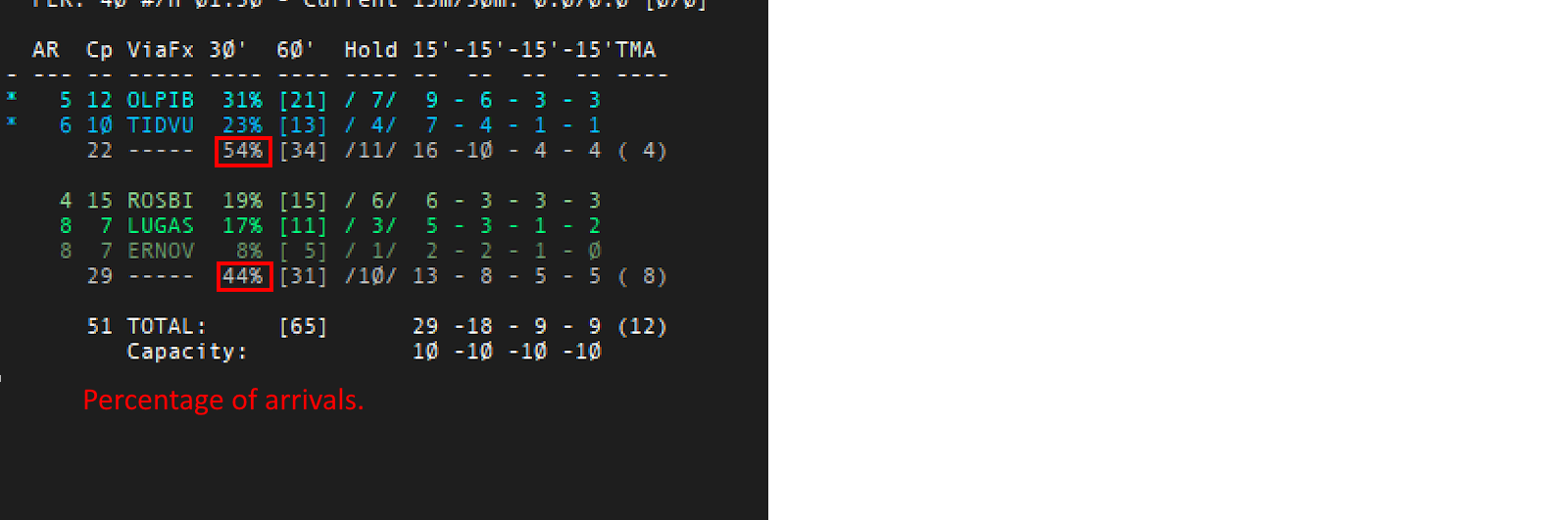
TheWithstatea split ofimbalanced~40/60floworisworse,sosignificantextremesteps should be taken to have a higher arrival rate on thatitside- OLPIB
shouldmaynotsometimes need to beused for more than15minutes.with 2 min / 10nm separation from theprioritizedSTAR you get 8 aircraft in in that time, meaning a hugely efficient thing.
MAKE SUREthe controller is using tight spacingConsider telling 10nm spacing, down to 7.5 pre-coordinated by you,in order toensureavoidlotstotalof traffic gets is.collapse.
If2controllerminiscanNOTbeadheringassignedtoatthefastesttight spacing consider giving additional individual releases to balance things out.rate.
3.2.2. ALBPriorities
This means that for PRIORITY STAR that:
PrioritizedForSTAREASThaspriority,10nm /2min separationTell ACC sector that 7.5nm is pre-coordinated by you with APP
All otherOLPIB STARson that side areSTOP,however on WEST STREAM you have freedom to do individual releasePriority TUDLO/TESPI has an hourly rate of ~36 an hour, meaning you can release ERNOV or TUDLO flights of ~2-3 airplanes during a 15 minute period to your liking depending on where its needed the most.
For TUDLO/TESPI priority MONAK still release with 6min due to the perceived threat of a stop at MONAKThiscan bealteredtakenifatrequiredlowerbyseparationyouorifOLPIBrequired
This means that for PRIORITY O/W that:
Priority W considers that TUDLO stream getsflights re-routedviatoVectorsEKCH_W_APP- For WESTpriority, TUDLO STARs can be re-routed to
the east side for sequencing and general balancing.EKCH_O_APP
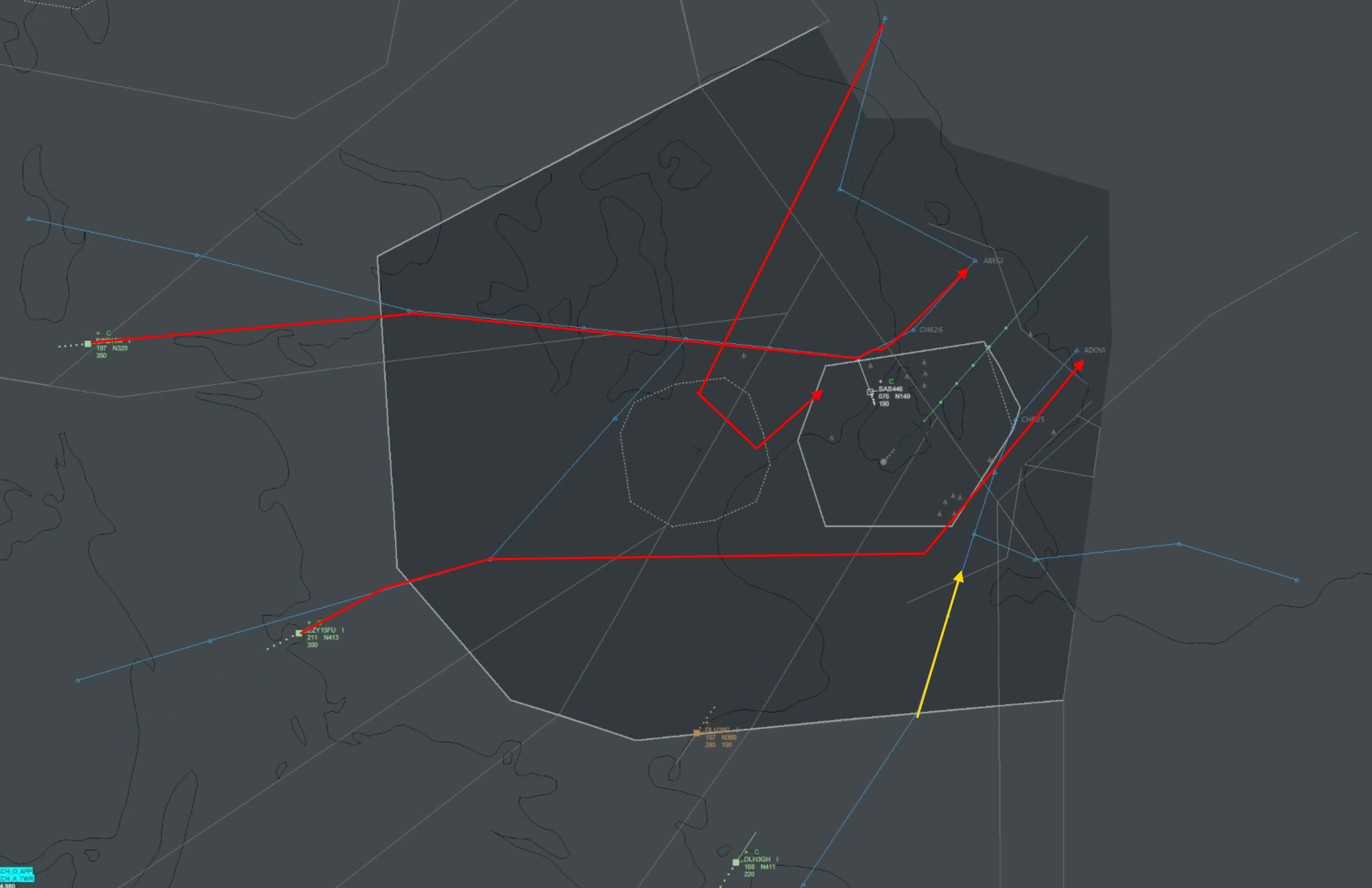
Priority-O will only be in case of light load on WEST stream and high load on BOTH MONAK and TIDVU STARThis would be a very rare phenomenon. For overloaded MONAK use "PRIORITY MONAK"
3.2.3 Thoughts and considerations
3.3 InterrogateInform
3.3.1Always General
Itclose iscontact vitalto APP-CO about your plans. advise him of any imbalance that youwould talkresult in change of standard separation from O/W to the Upper ACCs both domestic and foreign to pre-sequence and help out your ACCs. These are in particular following things in order of importance based off experience and feedback.FINAL.
MONAK: Talk to DWM (Muritz sector) and get them to stack airplanes from FL200 up to FL270 when you see a potential overload situation.DO NOT rely on EKDK_B to do this as he will be busyDO NOT rely on DWM to do this as he will not have an overview of what is needed
Establish Secondary holdings to stop flow into EKCHFor TUDLO establish enroute hold at TALSA when no more entries towards EKCH is accepted by youFor TESPI establish enroute hold at AAL when no more entries towards EKCH is accepted by youFor MONAK, tell DWM (Muritz) that no more inbound are accepted at this time (15min-30min. notice required) and advise to establish an enroute hold as desired, or start diverting.
3.4 Distribute
3.4.1 General
This is about distributing flights to which arrivals, or more precise when to REdistribute arrivals to other STARs.
We want to have an ~55/45 split on EAST/WEST. You should consider distributing flights to other STARs when you:
- See an imbalance or empty STARs with other STARs full but no extreme enough to warrant a "Prioritized flow".
- A potential overload situation can happen on a STAR if immediate action is not taken
- Tactical distribution for reasons of your discretion
3.4.2 Techniques
Changing a STAR must ALWAYS adhere to the following.
- Ask the Sector which will get the aircraft to request a tactical direct to their sector
- Ask the sector to change the flightplan route to be only the point of the new STAR.
When coordinating a re-routing please strongly consider using the "point" command to make the controller aware by writing
- ".point [X]" click the aircraft to point out.
- X is the 1-3 letter Idenfier of the station you are coordinating with
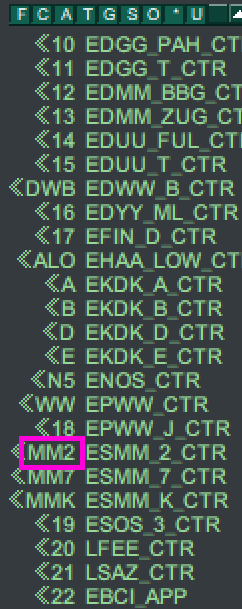
- IMPORTANT: Do not use the callsgin (EDWW_M_CTR), use the 1-3 letter identifier (DWM) (found in controller list)
3.4.2 Recommended distribution changes
Following flights are highly effective an recommended
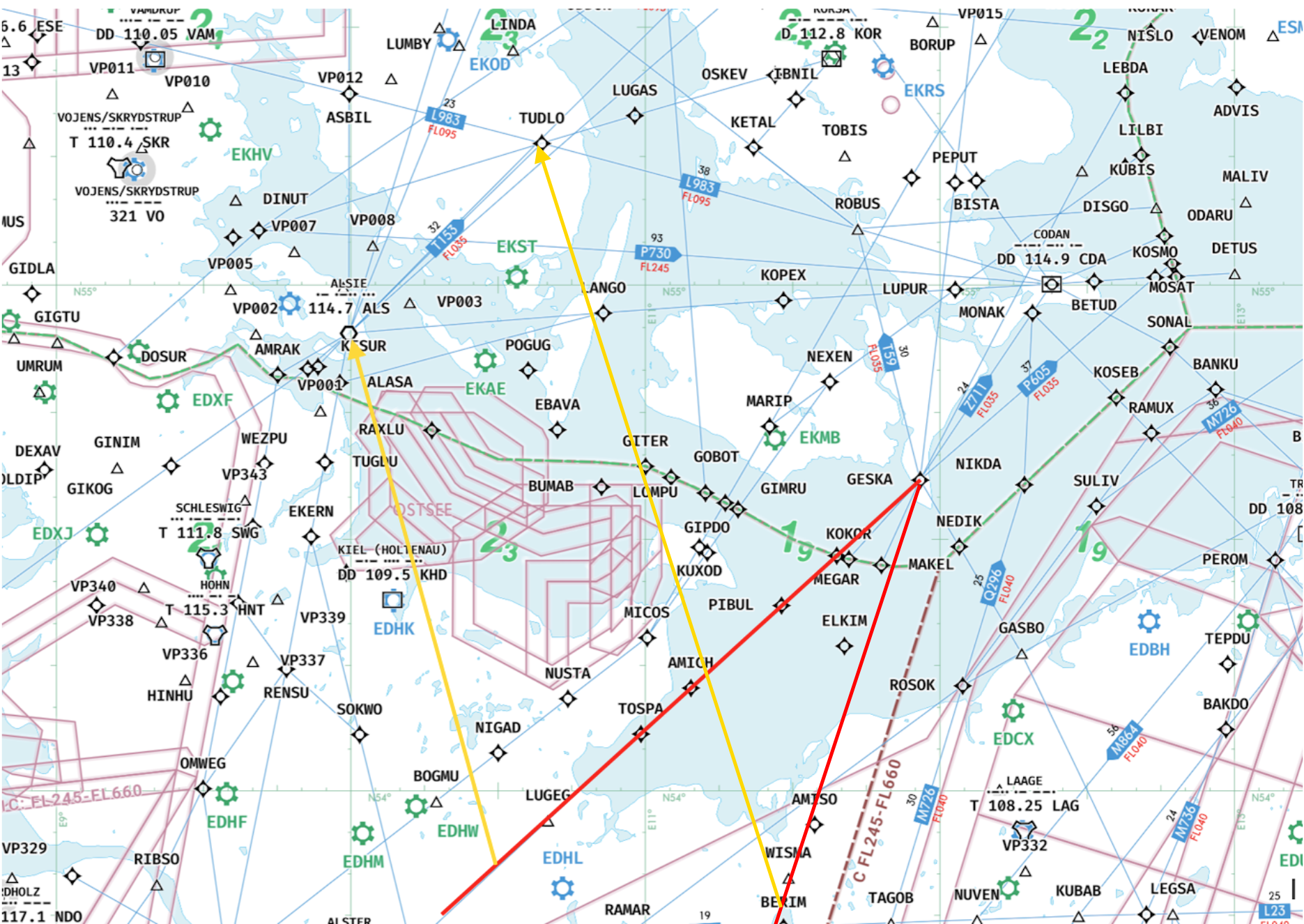
1. EDYY via MONAK - Distribute to TUDLO/TESPI
- Largest threat to the flow is the overload on MONAK. If you see a large amount entering via DWM (Muritz) take immediate action to get some of the GESKA arrivals from EDYY distributing to other STARs.
- Coordinate with DK_A to re-clear via Euroscope to either a vector or another point.
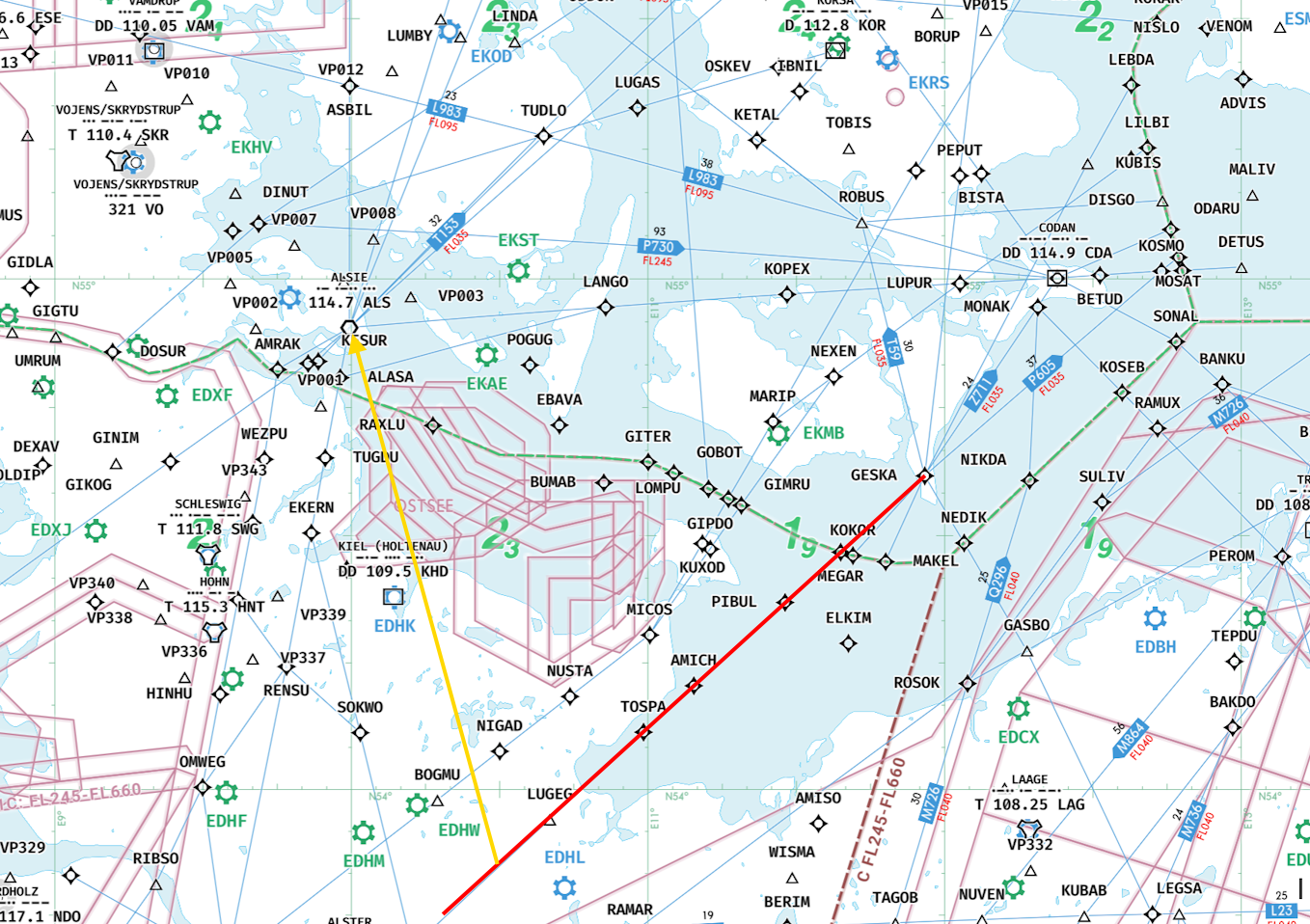
1. EDDH via MONAK - Distribute to TUDLO/TESPI
- EDDH flies at FL230 and hence creates all sorts of issues for DK_B. Consider distributing to TUDLO or TESPI depending on which STAR has the most space (Can be issues as an ECFMP as well)
- Consider whether to keep af FL230 or climb to FL290 to be distributed to DK_A
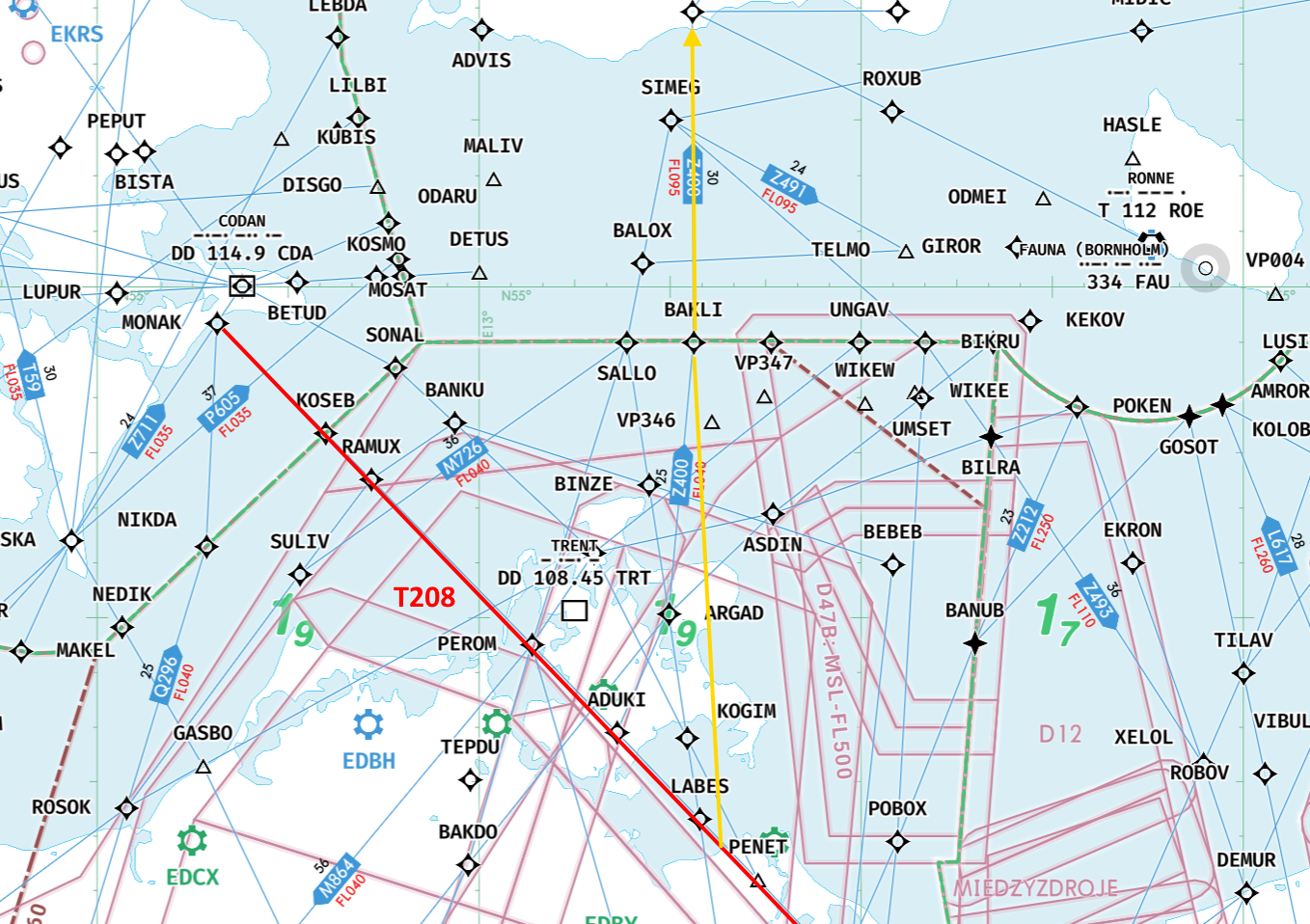
2. EDWW via MONAK from T208
- In a potential MONAK overload situation flights via T208 can be effectively rerouted to TIDVU for holding there. A good direct to propose is "BAKLI" as this is a valid point for the direction
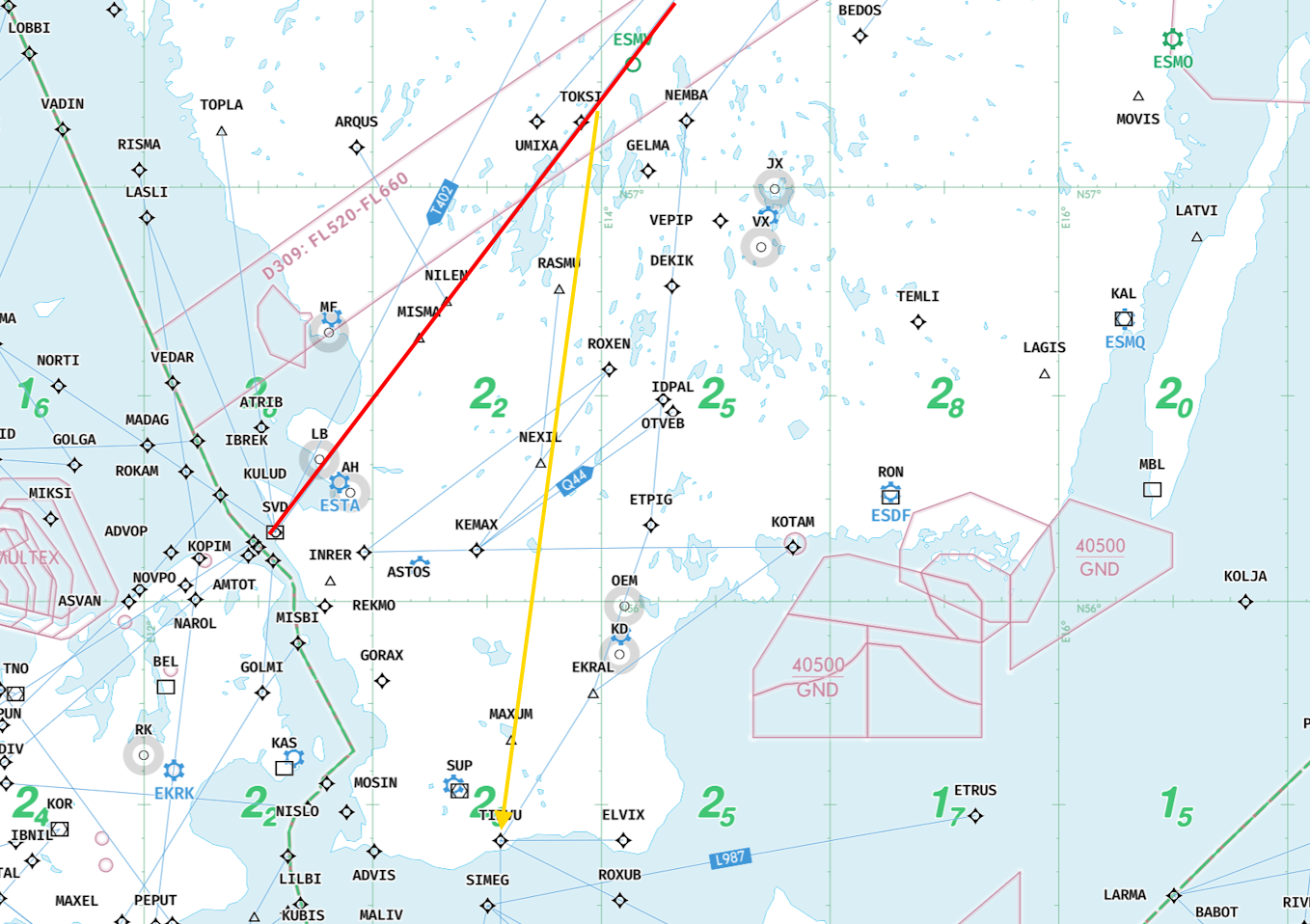
3. ESMM via ERNOV - Distribute to TIDVU
- If high load persist on WEST STREAM and you want to get aircraft to EAST STREAM the most effective way is distributing ERNOV arrivals to TIDVU. This is especially ERNOV arrivals from ESSA and EFHK, as they have a good angle. Coordinate with ESMM
- This is preferable to distributing TUDLO arrivals to MONAK, as long as ESMM or similar is online.
- Avoid distributing ERNOV arrivals from ENGM via L996.
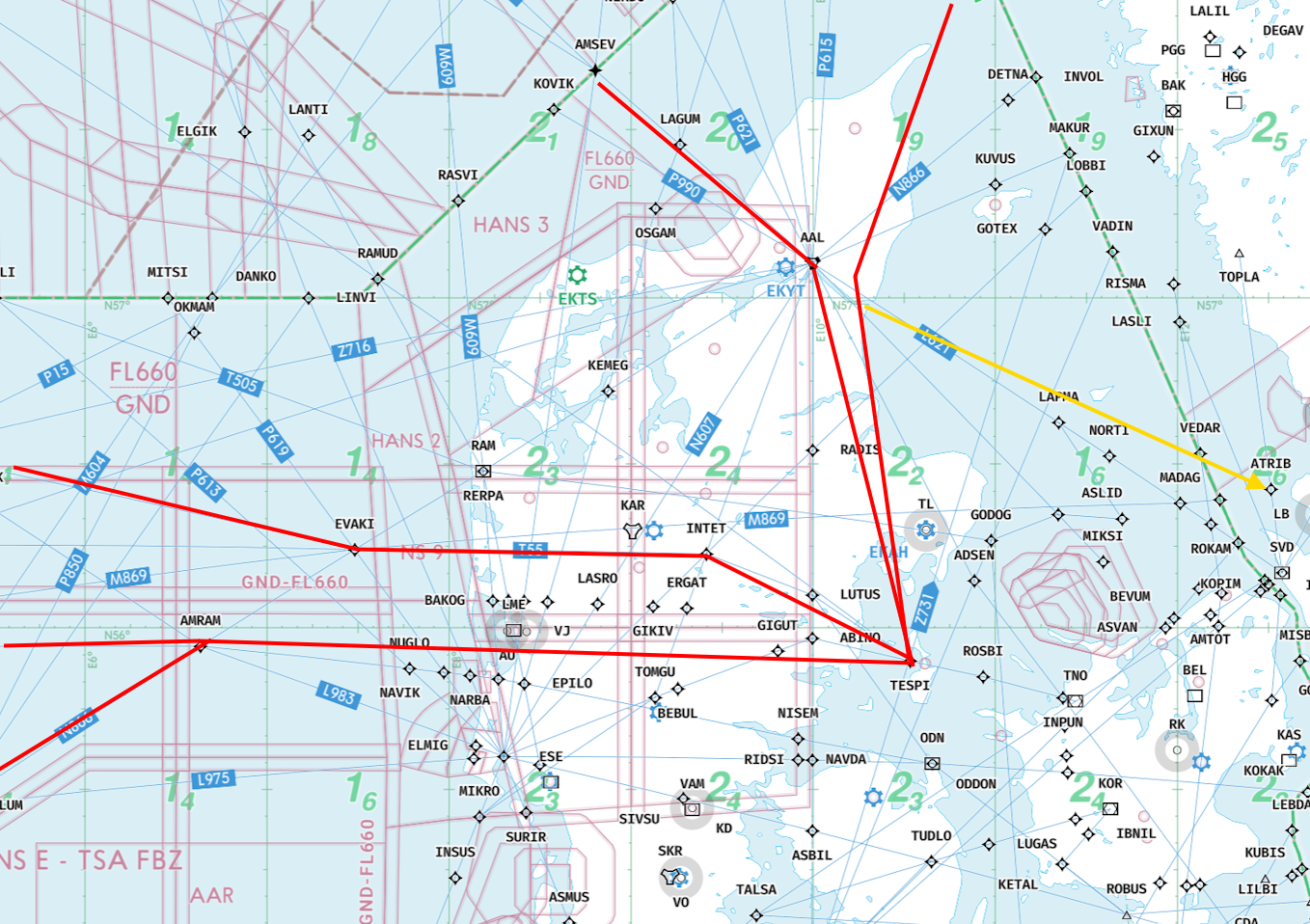
3. EKDK via TESPI - Distribute to ERNOV
- For extreme load on TESPI, consider distributing a few to ERNOV to keep hold managable. This is especially useful if you have high load from ENGM/ENBR combined with several flights crom EGPX
3.5 EqualizeEvaluate
3.5.1 General
This is to use ONLY when you also useChoose the STOPright functionsector infor ALB,the toright switch to individual releasecontroller
This is a useful feature when you have lots of stacked holdings everywhere, and we need to release people as they entered.
As EKDK_FMP you should have all 5 holdings opened, when in use
For each side you must identify who has been in holding the longest by identifying the ETO in the holding list
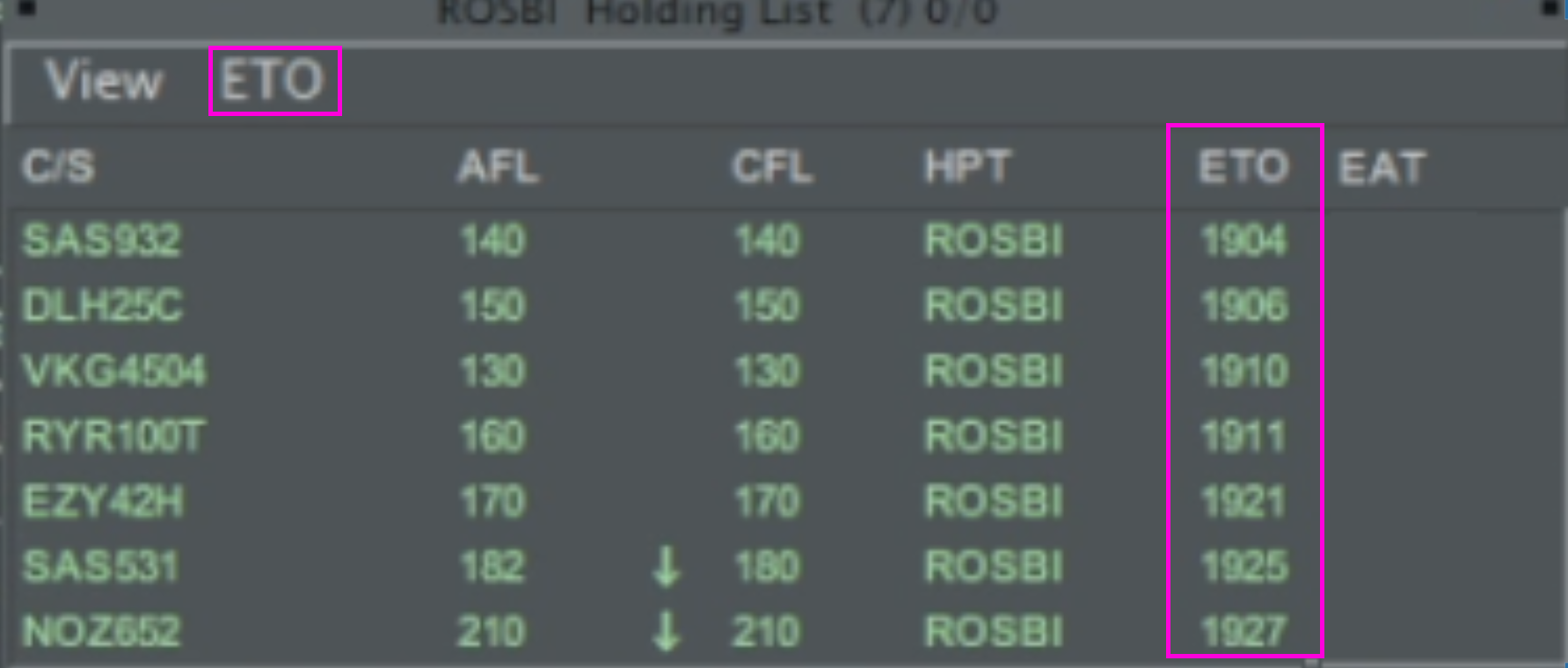
Ensure you have the holding sorted in ETO
3.5.2 Logic
Your logic mustTo be to release a certain amount of aircraft from one hold before then releasing a certain amount from another hold.Aircraft must be released with the rate given in ALB!
In this example you have the three holdings on WEST STREAM, and you are individually releasing from ETO. Make following observations
LUGAS has the oldest time at 0753ROSBI has an aboudance of planes in the holdingERNOV only has a few ones, and is not worth too much effort
3.5.3 Method
For this scenario we will keep the ERNOV EAT at 10min for simplification, but if a large holding persist at ERNOV it must also be included
In this scenario its a standard "RED" meaning 6min. from each of the TUDLO/TESPI STARs
Identify oldest airplane BAW816Release all airplanes up until the first one which is later than the oldest of the next STARIn this case SAS78C is 0757 and SAS2856 is 0756, meaning SAS78C is the last to be released
Tell EKDK_D_CTR to release all airplanes up to and including SAS78C and ask him to Highlight SAS78C
4. Tell EKDK_E_CTR the EAT of SAS2856. The time is "08:00"... two planes are released with 6 min apart meaning EAT for SAS2856 is 0812. ask him to write that in the holding list
5. Tell EKDK_E_CTR that after SAS2856 to release everybody with the rate until SAS445 (0803) to the revert back to D_CTR to release SAS031 and BAW822 respectively
5. EKDK_D will release SAS031 and BAW822 as point 3-5, back to DK_E who will release until DLH33, and then it head back to DK_D-
6. MMK will meanwhile release at EATs you are specifying. The rate takes into consideration an ERNOV every 10 minutes, so delay for an appropriate gap
In this scenario consider releasing an ERNOV every time you switch, aka releaseETH728 after DLH33)SAS1429 after SAS2165
Use your best judgement and logic
3.6 Sector Distribution
3.6.1 Four-way east split
By default, the following ACC sectors are staffed:
EKDK BEKDK D (assumes I)EKDK EEKDK UC (assumes A/C/UA)
If the departing traffic load through sector I is heavy, and the controller managing D sector faces an overload, the UC controller can assume I sector in addition to all upper sectors, by selecting the EKDK A frequency (135.290).
3.6.2 Three-way east split
Alternatively, when 3 controllers are available, the BIDE area is split as follows:
EKDK B (assumes I)EKDK E (assumes D)EKDK UC (assumes A/C/UA)
If the traffic flow thorough any of the BIDE sectors is too high, the UC controller can assume sector I as above, or sector D by selecting the EKDK C frequency (128.215).
Any sector swapping measures must be communicated to APPCO and Bremen/Maastricht. Ensure that the standard UC frequency remains cross-coupled throughout any sector swap.