
What is CDM
CDM is a modern tool that helps us manage traffic flow and make sure capacity is not exceeded elsewhere. Other airports also use it to adjust traffic flow and protect our sectors.
CDM is MANDATORY for ALL online controllers, to different extents!
-
ATFCM is the management of CTOTs and is mandatory for ALL controllers regardless of position, as long as traffic load allows. This is covered under "Simplified CDM Procedures".
-
A-CDM is the management of TSATs for sequencing at the airport, and is mandatory for TWR/GND controllers to the extent feasible. This is covered under "Expanded CDM Procedures".
-
The CDM plugin should always be running regardless.
Abbreviations and Explanations
CDM: Collaborative Decision Making: umbrella term for flow restriction and planning to ensure appropriate ATC capacity during all phases of flight.
ATFCM: Air Traffic Flow and Capacity Management: regulates flights based on sector and airport capacity by issuing CTOTs, managing traffic limits across Europe.
A-CDM: Airport Collaborative Decision Making: local airport flow management based on turnaround and TOBTs, so aircraft taxi and take off without congestion.
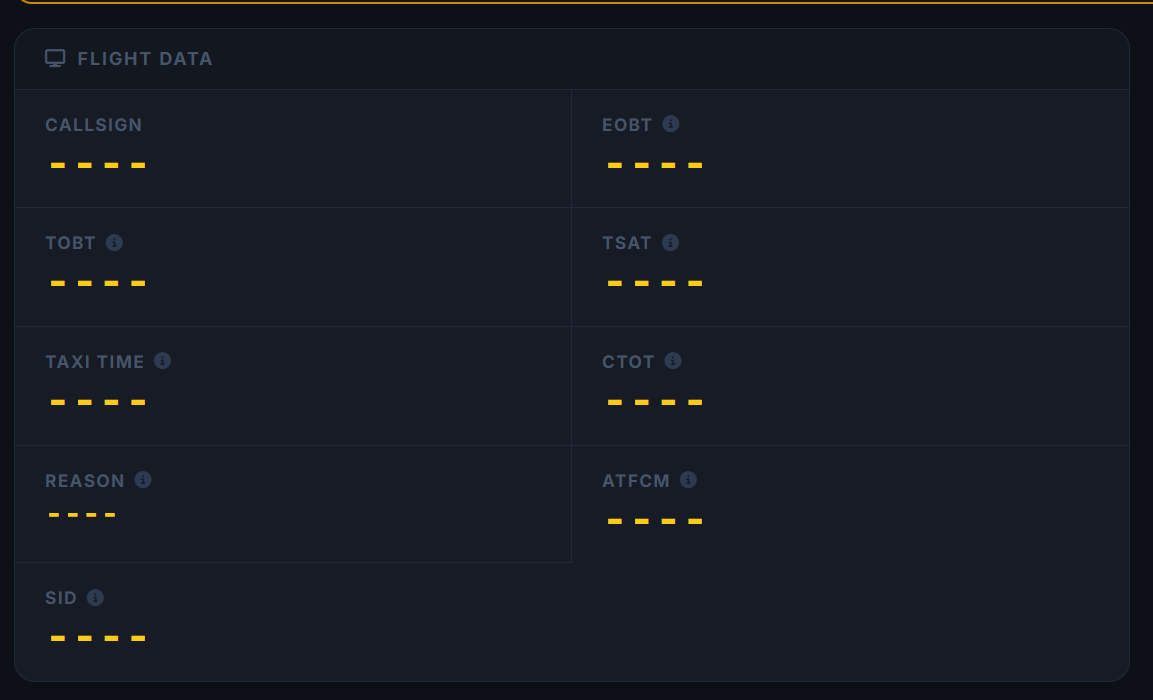
EOBT: Estimated Off-Block Time: the planned off-block time filed in the flight plan.
TOBT: Target Off-Block Time: the time the pilot expects to be ready, set or confirmed by the pilot (or by the controller) once on board.
TSAT: Target Start-up Approval Time: system-calculated time for start-up approval, to comply with CDM/ATFCM.
ASRT: Actual Start-up Request Time: the time the pilot requested start-up. Setting it lets the system look for an earlier TSAT.
ASAT: Actual Start-up Approval Time: the time start-up was approved.
CTOT: Calculated Take-Off Time: the time the aircraft must take off, within -5/+10 minutes, to comply with ATFCM.
What does it all mean?
Quick breakdown of the basic rules
EOBT is always filed as part of the flight plan.
TOBT is set and updated during boarding, as the expected ready time may move back and forth. The pilot can choose this time freely. It is essentially a "fine-tuning" of the EOBT. A controller may also set this time.
TSAT is the time CDM has targeted for the pilot to start up. It is based on:
- The departure rate per hour (set per airport and runway configuration)
- The taxi time to the runway
- The nearest free take-off slot, minus taxi time, as close as possible to the TOBT
ASRT is set when the pilot requests start-up. It is more than a reminder: it stops the flight being invalidated at TSAT, lets the system look for an earlier TSAT, and locks the TOBT against further changes from the pilot.
ASAT is the time the pilot was given start-up approval.
Pilots KNOW their TOBT (they set it themselves).
Pilots can see their TSAT on the VDGS, but it may CHANGE until start-up is approved. Always use the TSAT shown in your CDM list, not one quoted by the pilot.
What to expect from pilots
- The pilot has an off-block time, the EOBT. This is filed with the flight plan.
- The TOBT initially follows the EOBT.
- Pilots can use vats.im/vdgs to confirm or update their TOBT. Pilots who want to avoid long delays should do this, but it is not mandatory.
Pilots shall call within +/- 5 minutes of their TOBT (the one they set).
Start-up shall only be granted within +/- 5 minutes of the TSAT (the calculated one).